
Moisten the callus in warm water for 5 minutes before application.

Productos / Podiatric Care / Callicidal dressings
Callicidal dressings
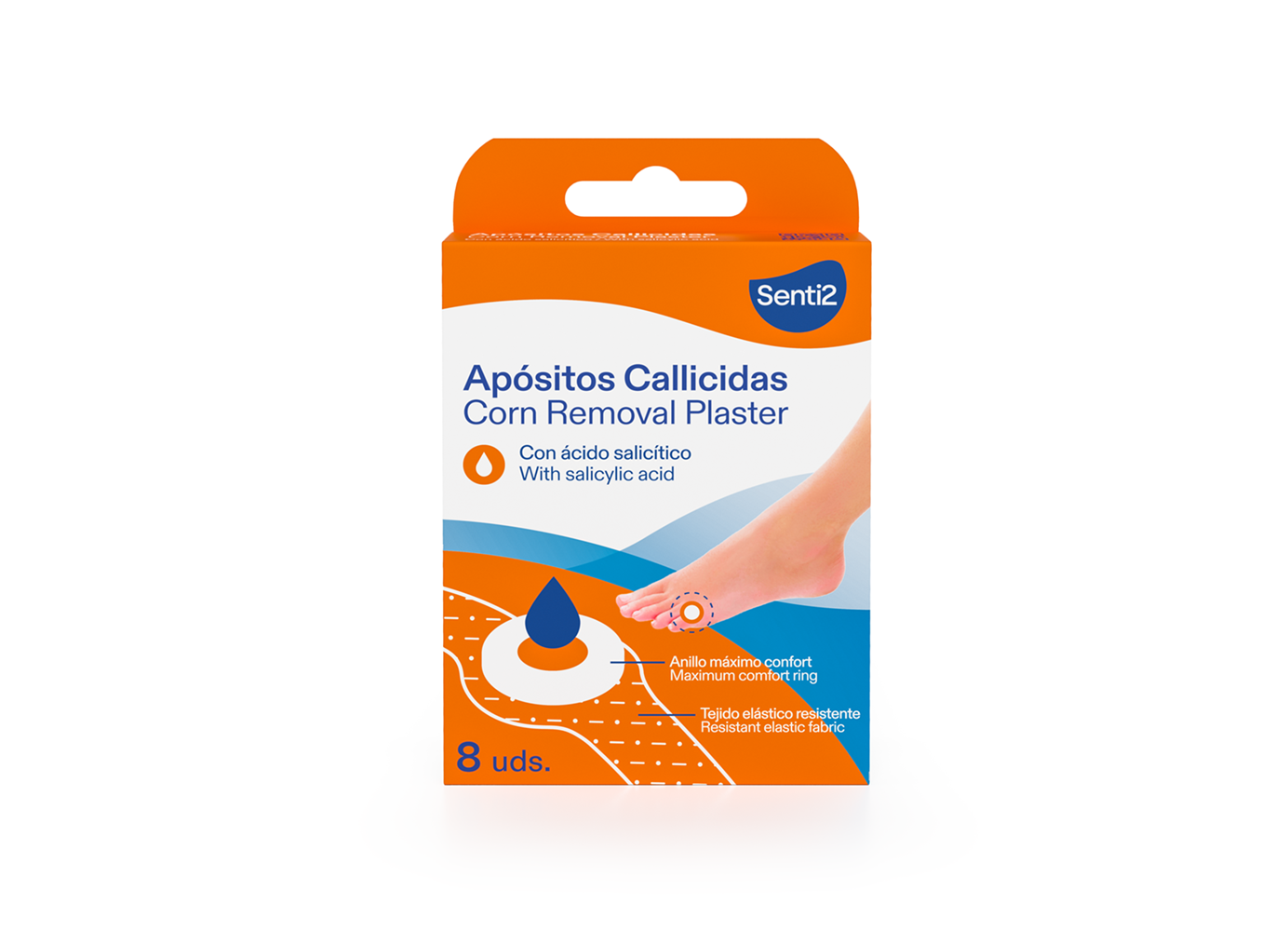
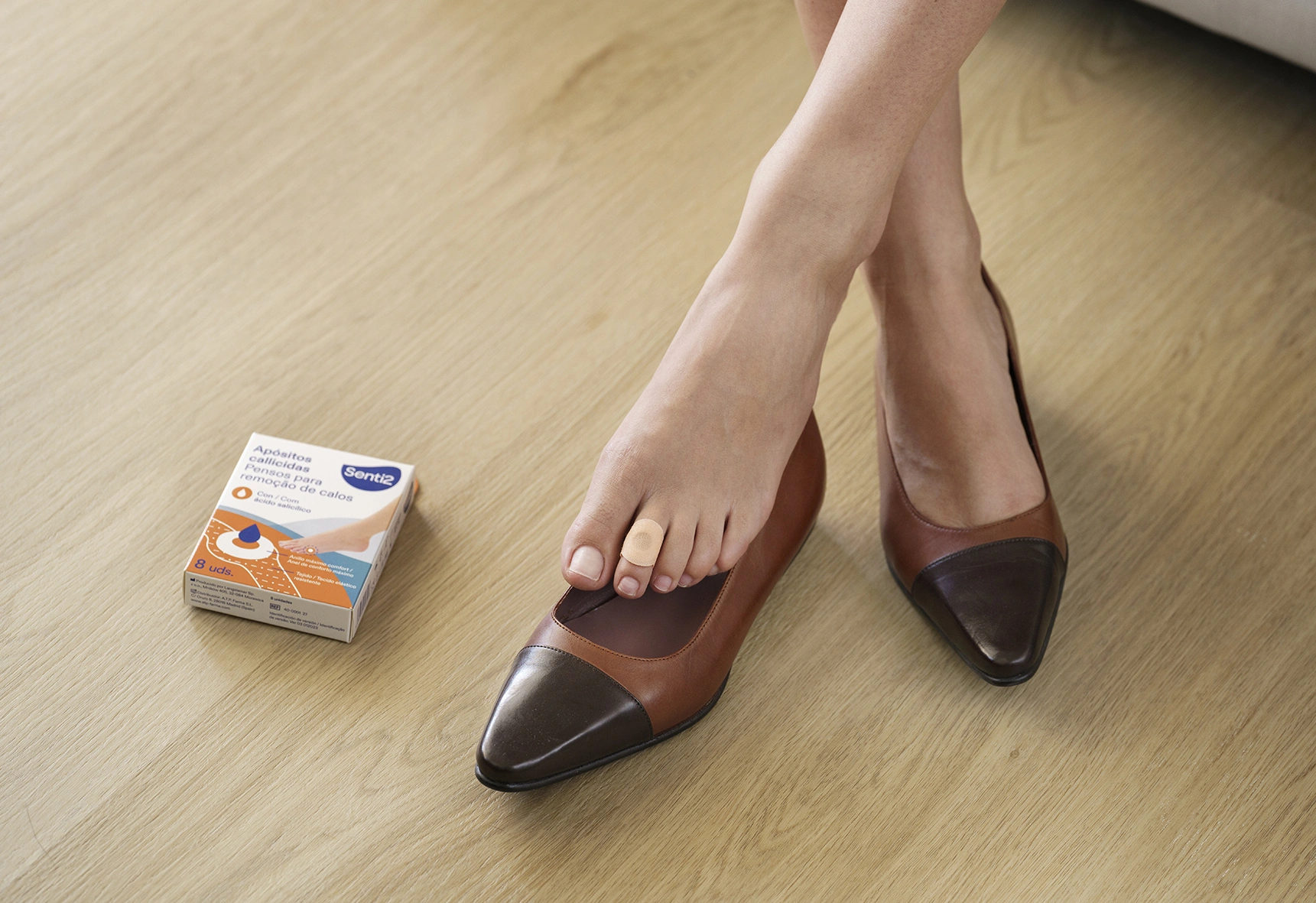
Helps eliminate corns and calluses from the feet, forming a ring of maximum comfort that reduces friction and mitigates pain.
Instant relief and comfort for your feet

With salicylic acid
Effectively removes corns and calluses

Anti-pressure system
Immediate pain relief

Resistant elastic fabric
Increases dressing durability
Instructions for use
Follow these steps for effective protection:
1
2
Clean and dry the skin in the area to be treated.
3
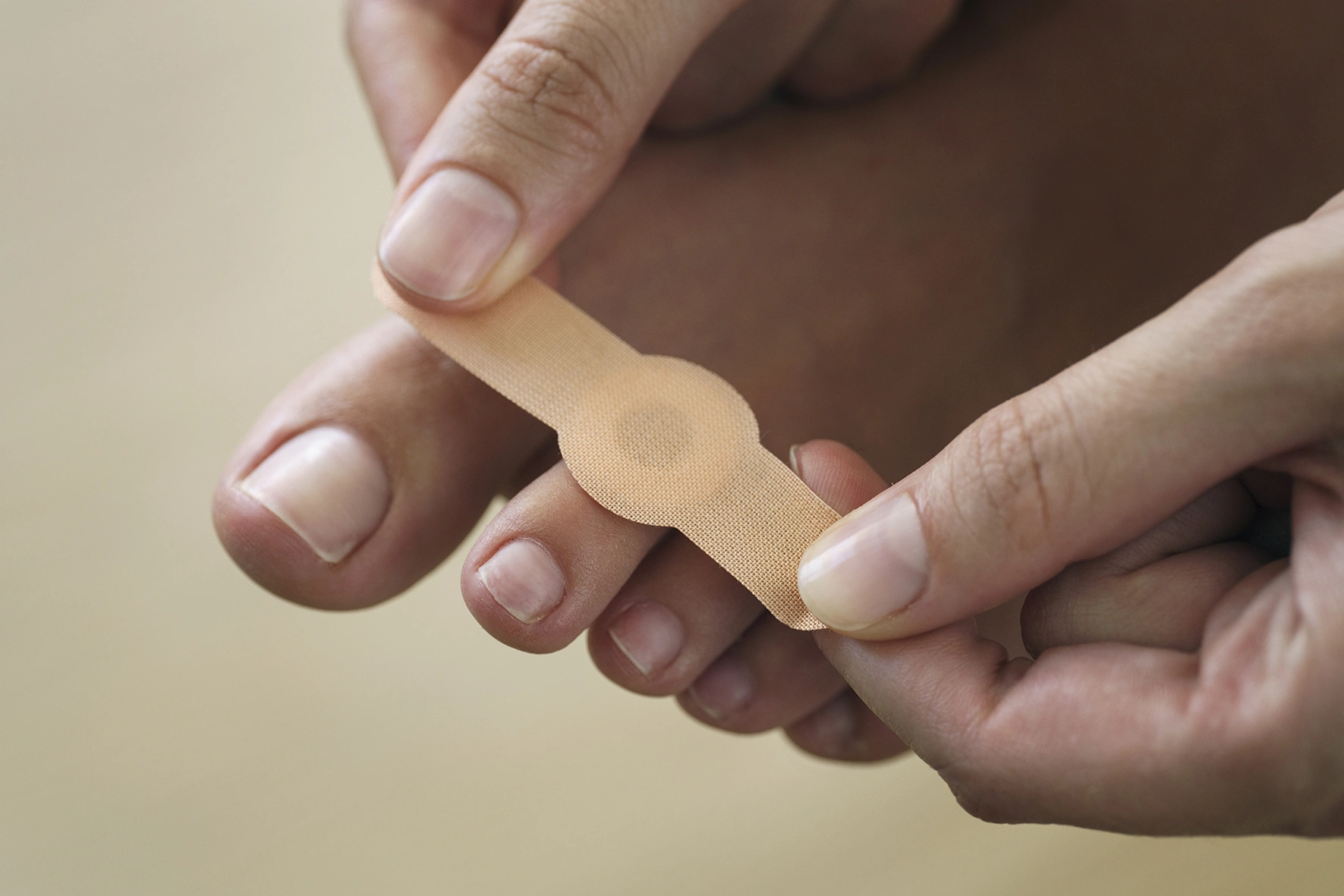
Separate the non-stick strip avoiding touching the adhesive side.
4
Apply the dressing with the disc over the center of the callus, sticking the edges well.
5
Remove the dressing after a maximum of 48 hours.
6
Soak the area in warm water for 5 minutes before removing the dead skin.
Instructions for use
Follow these steps for effective protection:


FAQ
Frequently Asked Questions
Consult other users' questions or contact us for more information.
How does salicylic acid work?

The salicylic acid embedded in the center of the foam ring softens the hardened skin of the callus. It acts by softening the intercellular structure that holds and integrates the callus cells. This results in increased hydration, whereby the callus swells and softens so that it can be easily peeled off.
How long should I leave the dressing on?
Dressings should be applied until the callus is removed, for a maximum of 10 to 14 days. Replace the dressing every 24 hours. Once the treatment is finished, the root of the callus can be removed with a foot bath of warm water with salt and soap.
How can I prevent calluses from forming?
We can do a lot to keep our feet in good condition, for example, by wearing shoes that fit our feet well and using special skin moisturizers. However, sore spots, calluses and calloused skin are a very common problem. As a preventive measure, we recommend Senti2 pressure protection rings as soon as the first symptoms appear. The soft, self-adhesive pads provide immediate pain relief and protect sensitive areas of the feet from pressure and friction.