
Brush and rinse the appliance with water to remove major food residues.

Productos / Oral Health / Cleaning tablets for dental prosthesis
Cleaning tablets for dental prosthesis
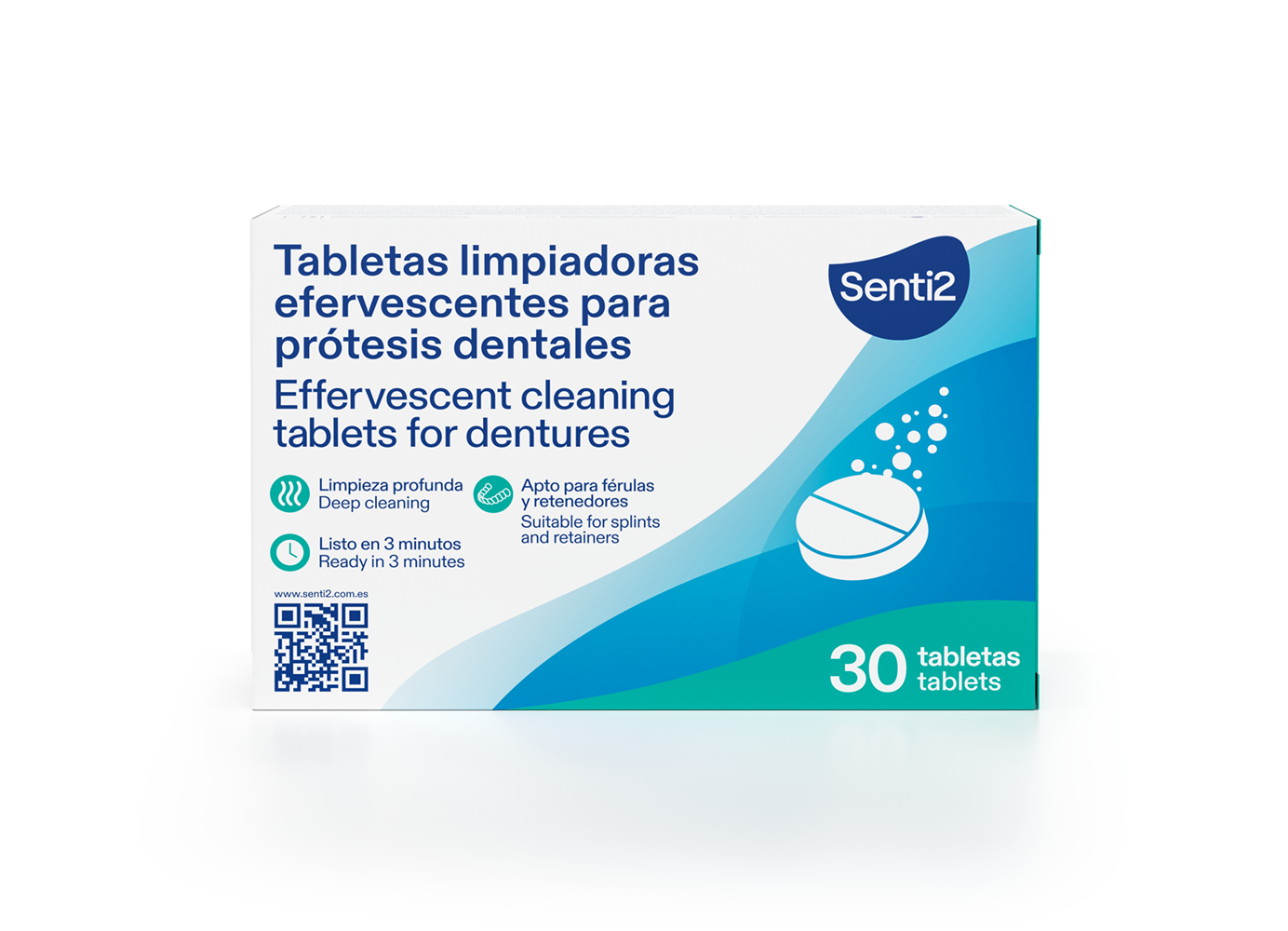
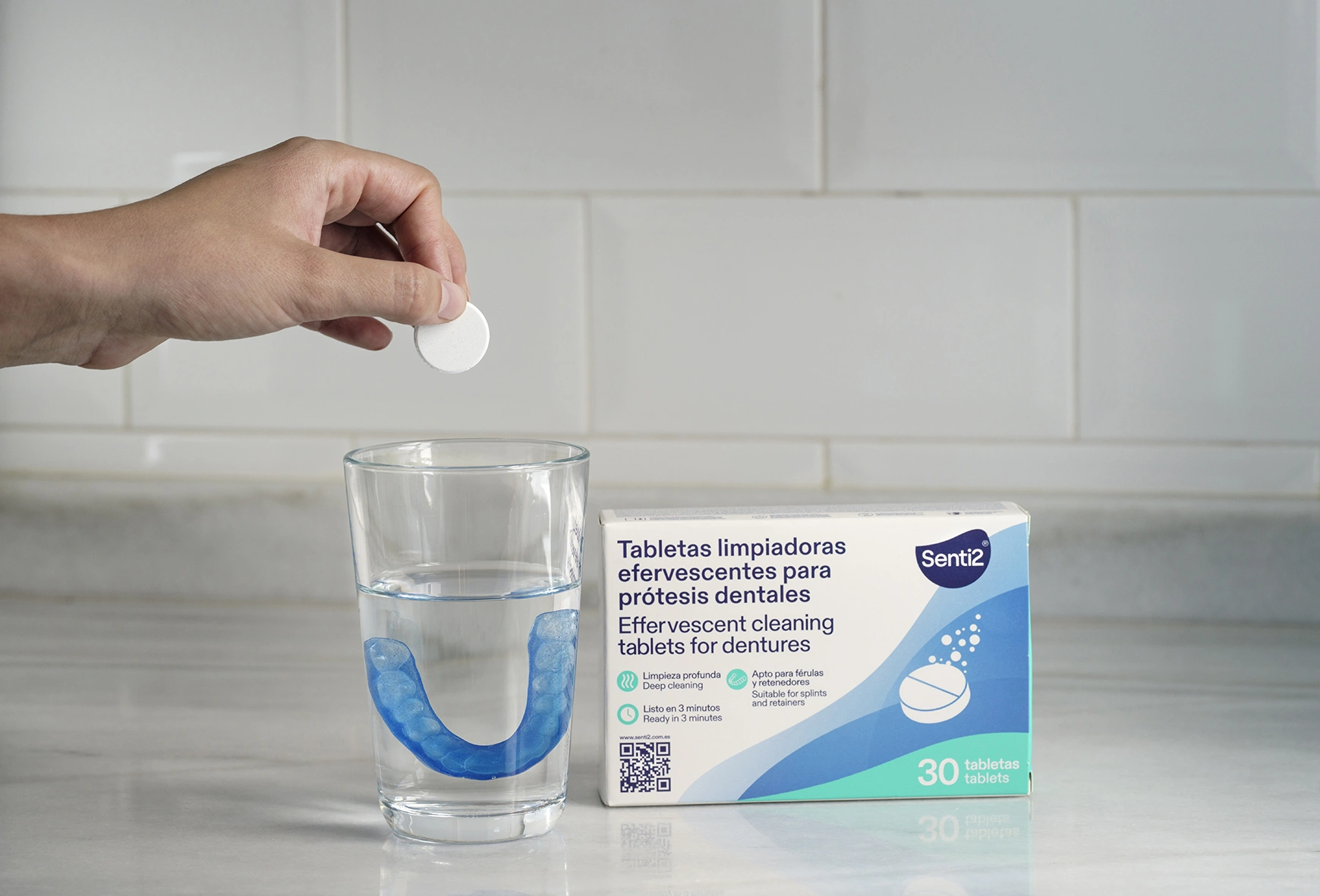
They clean, disinfect, remove stains and odors, reducing the risk of gum irritation. Suitable for use in mouthguards, orthodontic appliances and mouthguards.
3-in-1 cleansing action

Anti-Plate
Kills 99.9% of bacteria in just 15 minutes

Anti-Bad Odor
Eliminates unpleasant odors thanks to its mint flavor

Anti-Spots
Helps to restore the original color of the enamel in just 15 minutes

With Active Oxygen
Cleans in depth reaching areas where the brush cannot reach

No oxidizing or corrosive agents
Care for the most delicate denture materials
Instructions for use
Follow these steps for effective cleaning:

Recommended for daily use
1
2
Place the prosthesis in a glass, cover it with 100-200 ml of warm water (approx. 35ºC) and add a tablet.
3
Let the mixture act for at least 15 minutes (you can safely let it stand overnight).
4
Rinse the dental prosthesis thoroughly with water before use.
Instructions for use
Follow these steps for effective cleaning:


Recommended for daily use
FAQ
Frequently Asked Questions
Consult other users' questions or contact us for more information.
Can it be used with Discharge Splints?

Yes, Senti2 cleaning tablets are designed to clean any type of orthodontic appliance or dental prosthesis.
Can I leave the prosthesis in the solution longer than indicated?
For a deeper cleaning you can leave it on overnight. However, it should not be used for longer than the time indicated on the box. Remember that each solution can only be used once, then it must be discarded and the prosthesis must be thoroughly rinsed with water and a soft brush.
How often can I use Senti2 tablets?
Senti2 tablets are recommended for daily use and 1 tablet at a time.
Do I have to use one tablet for each part of the prosthesis (lower and upper)?
No, by placing the prosthesis in a glass, one tablet should be enough.
Why should I use Senti2 tablets instead of regular toothpaste? Is it better than regular toothpaste?
Common toothpastes contain abrasive substances that help clean natural teeth mainly by mechanical action. As you know, the acrylic used in dentures is softer than natural enamel. Therefore, the abrasive substances present in the toothpaste can scratch the surface of the prosthesis, which helps to create ideal conditions for the growth of odor-causing bacteria.